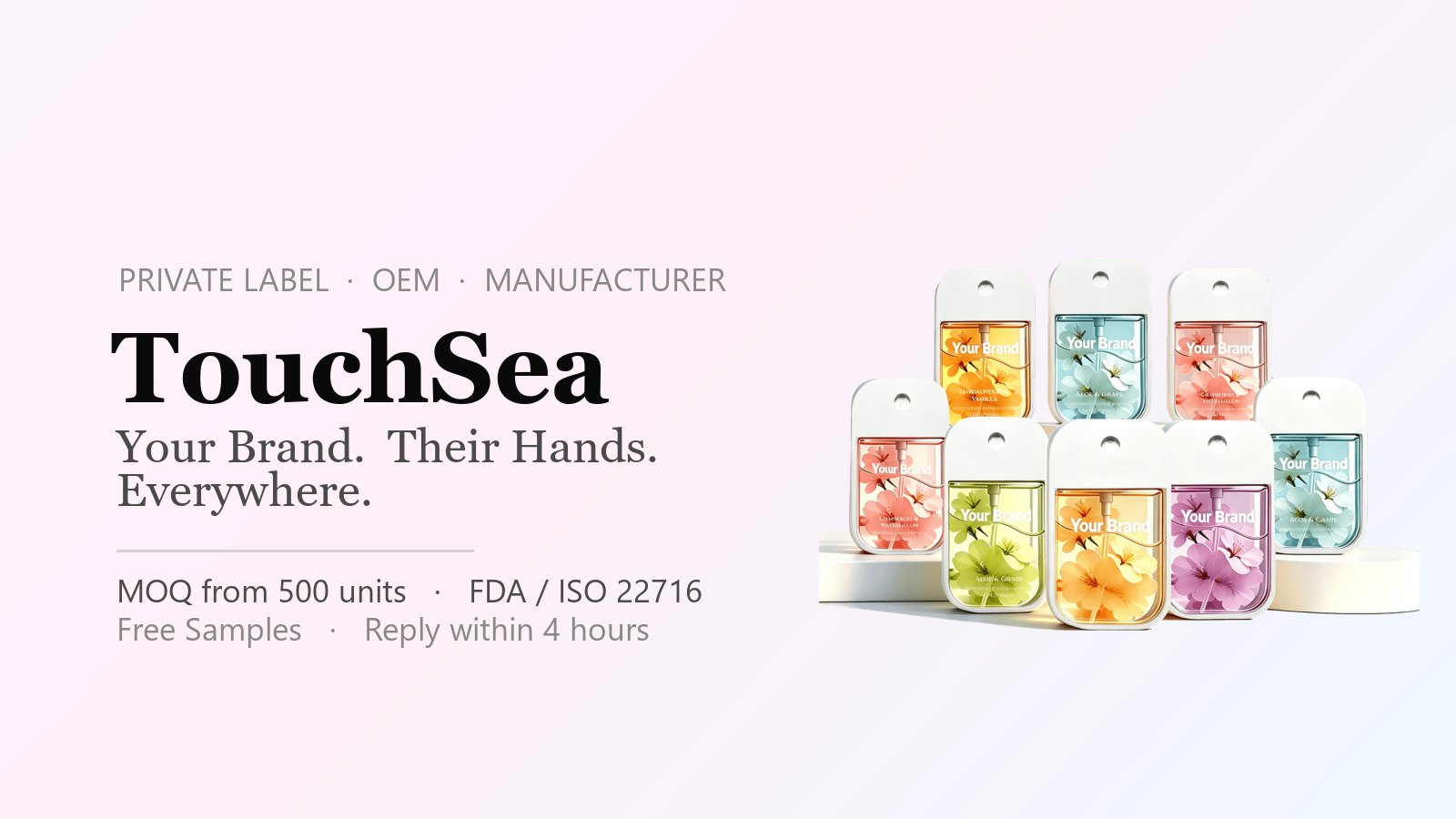
Summary: "My hands are so dry after using sanitizer" is the #1 complaint in every review section. The fix isn't a lotion — it's a formula choice. We evaluate hand sanitizer formulations by skin type, showing which ingredients solve which problem, and what to look for on a label when your target customer has eczema, sensitive skin, or frequent handwashing.
Primary keyword: best hand sanitizer for dry skin
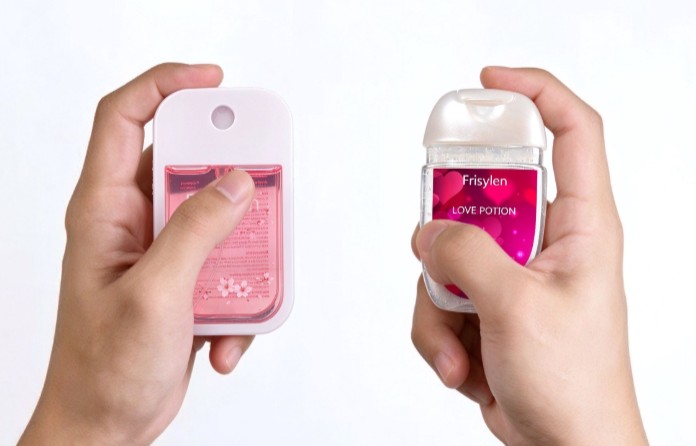
1. Why Alcohol-Based Sanitizer Dries Skin
The mechanism is straightforward and it is the single most important thing to understand about this category. Alcohol is a solvent, and a solvent strips lipids. Your skin's outermost layer, the stratum corneum, is a lipid matrix holding water in place — it is what keeps your hands from cracking. An alcohol-based sanitizer dissolves a portion of that matrix on contact, and because it then evaporates quickly, there is no chance for the moisture to be replaced.
Two variables determine how badly a given formulation dries the skin. The first is alcohol concentration, and the relationship is not linear: the practical experience is that most of the drying effect happens early and then plateaus, so moving from 70% to 80% does not feel twice as bad, but moving from 70% to 95% does feel noticeably worse because the higher concentration also strips faster. The second variable is whether the formula replaces what was stripped — this is where humectants come in.
The important consequence for a brand owner is that "dries out my hands" is not primarily a packaging problem or a customer-education problem. It is a formulation problem, and it is solvable. A well-built 70% formula with a meaningful humectant load feels materially different from a bare 70% formula, and the difference shows up directly in review scores.
There is also a limit worth stating plainly. No alcohol-based sanitizer is as gentle on skin as not using one. For someone with active eczema or a diagnosed fragrance allergy, the correct answer may be a non-alcohol sanitiser or simply soap and water, and a brand that claims otherwise is over-promising. What a brand can honestly do is minimise the damage within the constraints of an alcohol-based product.
2. For Dry Skin: Humectant-Rich Formulas and What to Look For
For customers whose main complaint is dryness, the formula should be built around three ingredients, in this order of importance.
Glycerin is the reliable performer. It works by hygroscopic action — it draws and holds water in the stratum corneum — which is precisely the mechanism needed when alcohol has removed the lipids that were holding that water. It is inexpensive, widely available, and it does not introduce sensitivity concerns. Propylene glycol and panthenol (provitamin B5) are the other two worth having on the specification sheet: propylene glycol is a humectant and mild emollient that also improves the feel of the gel, and panthenol supports skin barrier recovery. Aloe is common in the category and harmless at normal levels, but its reputation as a skin hero outruns its function as a humectant, so it should be treated as a supporting ingredient rather than the active one.
What to look for on a label, in order: the alcohol percentage stated explicitly, the humectants named in the ingredient list, and whether fragrance is absent or minimal. A label that lists a long ingredient list without glycerin or an equivalent humectant is telling you something.
The commercial opportunity here is straightforward. The dry-skin segment is where customer complaint volume is highest, and complaint volume is what drives review scores and repeat purchase. A formulation that genuinely performs better on dry hands is a defensible reason for a customer to choose your product over a cheaper one, and it supports a price position that plain formulations cannot hold.
One caution for buyers: "contains aloe" on the front of the bottle is a marketing claim, not a formulation specification. Ask for the ingredient list and the humectant concentration. If the supplier cannot state the humectant level, that is information too.
3. For Sensitive Skin: Fragrance-Free, Minimally Fragranced, and What to Avoid
Sensitive skin is a different problem from dry skin, and the two are often conflated. Dry skin needs moisture replaced. Sensitive skin needs irritants removed. Treating them the same way is why some "gentle" formulas still generate complaints.
Three things drive sensitivity in an alcohol-based sanitizer. Fragrance is the most common contact allergen in the category, and because in an alcohol base it is dissolved and sits on the skin rather than being rinsed away, sensitised users react precisely when they are trying to protect themselves. Essential oils carry the same problem — they are often positioned as the natural alternative and are frequently the actual irritant. Dyes and colourants are the third, and they appear in a lot of products for purely visual reasons.
For this segment, the correct specification is: a fragrance-free formulation, a minimal dye load or no dye, the lowest effective alcohol concentration the target market allows, and a high humectant load to compensate. That is a genuinely different product from the mass-market formula, not a marketing variant of it.
The claims language matters here more than anywhere else in the category. Words like "hypoallergenic", "dermatologist tested", and "sensitive skin" are regulated in most markets and each one needs a documented basis. Dermatologist tested means the finished product was tested under the supervision of a qualified dermatologist and there is a test protocol behind it — it is not a decoration you add because the product sounds gentle. If you cannot produce the documentation, do not use the phrase. The same applies to "hypoallergenic", which is not a defined term in many jurisdictions and is treated as a comparative claim that implies the product is less likely to cause reactions than others. Vague gentleness language on a product aimed at reactive skin is both a legal exposure and a credibility risk.
The practical business case is unaffected by these constraints. The sensitive-skin segment is underserved because it requires a different formula rather than a different label, and a brand that builds a compliant one has a product that cannot be trivially copied.
4. For Normal Skin: The Standard 70% Ethanol Formula
For the majority of users, the standard formulation is entirely sufficient, and over-engineering for them adds cost without adding value. The benchmark is a 70% ethanol or 70% isopropanol formula with a moderate humectant level, in a gel or spray format.
The reasoning behind 70% is worth stating because it gets questioned often. The concentration is high enough to kill effectively and comfortably clears the regulatory thresholds in major markets, while the water content is functionally necessary rather than a filler — water is what allows the alcohol to stay in contact with the skin long enough to denalyse microbial proteins. Pushing to 95% or 100% does not make the product more effective in practice, and it makes the skin experience notably worse. The 70% benchmark represents the point where efficacy is comfortably achieved without paying an additional cost for marginal benefit.
For this segment, the differentiators are experience and format rather than formulation chemistry. A gel that dispenses cleanly, a spray that atomises finely without a hard blast, a scent that is pleasant but not loud — these are what separate one standard formula from another in a review section. This is where a brand competing on price should not try to win on formulation and should instead win on packaging, scent, and shelf presence.
The one addition worth making even for a standard formula is a humectant. It costs very little, it is the single most-mentioned source of good reviews in this category, and it does not complicate the regulatory or production picture. A 70% formula with glycerin is simply a better product than a 70% formula without it, at negligible cost.
5. The Premium Tier: Skincare-Forward Sanitizers
The premium tier in this category is defined by formulation architecture rather than by a higher alcohol percentage, and understanding that is what separates a premium product from a expensive-sounding one.
The defining features are: a multi-humectant system rather than a single ingredient, so the formula addresses both immediate dryness and barrier recovery; lower fragrance load or fragrance-free positioning, because premium in this category increasingly reads as restraint; a skin-conditioning active with a documented function, such as panthenol, allantoin, or a properly specified botanical with evidence behind it; and a premium sensory profile in the texture, the glide, the dry-down, and the packaging tactility.
Notice what is not on that list: a higher alcohol percentage. Marketing a sanitizer as "80% alcohol for stronger protection" is both weak positioning and, in many markets, an unsupported comparative claim. The premium story in this category is about what the formula does after it has sanitised, not about how hard it hits.
The commercial case for going premium is real but conditional. It only works if the claim is substantiated — a "skincare-forward" product that visibly dries hands destroys the premium positioning faster than anything else, and review sections are where that shows up first. It also requires the pack to deliver: premium formula in a plain bottle reads as a failed attempt at a premium product, whereas premium formula in a considered pack reads as intentional.
For brand owners, the practical sequence is usually to launch the standard formula well, then use the customer data from the first run — which SKU people ask for, which complaints dominate — to decide whether a premium variant is a real demand or an assumption.
6. How to Test: What to Ask When You Receive OEM Samples
The point of sample evaluation is to find formulation problems while they are still cheap to fix. A structured protocol catches far more than an informal sniff-and-squirt does.
Ask for the documentation before you evaluate the sample. You want the full ingredient list with the key concentrations specified — alcohol type and percentage, humectant levels, fragrance concentration or absence, preservative system — and the supporting certificates. If a supplier cannot provide these, the conversation is already over.
Then test the sample on people, not just on yourself. Dryness and sensitivity vary enormously between individuals, and the customers who will decide whether your product succeeds are exactly the ones with the most sensitive skin. A small panel — ideally ten to fifteen people including at least a few with dry or sensitive skin — will surface problems that a single tester never will.
Test it in the conditions of use. Apply it repeatedly over several days, not once. Skin reactions to a formula that looked fine on day one frequently appear on day four. Test on the hands, not the back of the hand, because application pressure and frequency differ. And test the dry-down on skin that has already been washed, since that is the realistic state.
Measure what you can. Ask the panel to score dryness, sting, scent strength after drying, and overall likelihood to repurchase on a simple scale. Ask them to note when they would use it — before or after washing, at a sink or away from one — because that reveals whether the format suits the behaviour you assumed.
Finish with the mechanical checks. Pump output per actuation (too little and users under-dose, which they report as ineffective), leak resistance when inverted, and how the product behaves at the label's stated shelf life temperature. These are unglamorous and they generate a disproportionate share of one-star reviews.
The most useful thing to bring to a supplier conversation is a written specification with acceptance criteria, not a reference product. State the alcohol concentration, the humectant level, the fragrance status, the pump output, and the panel score you need to hit. That turns a subjective evaluation into something they can quote against, and it is the difference between a sample round that produces a decision and one that produces another round of samples.
Need a formulation matched to your customer segment?
FAQ
Q: What is the best hand sanitizer for dry skin?
An alcohol-based formula at around 70% ethanol with a meaningful humectant load, built around glycerin with propylene glycol or panthenol as supporting ingredients, and low or no fragrance. The alcohol concentration alone does not determine dryness — the humectant level is what determines whether the skin recovers. No alcohol-based sanitizer is as gentle as avoiding the product entirely, but a well-formulated one is a large improvement over a bare formula for users who need to sanitise frequently.
Q: Is alcohol-free hand sanitizer better for sensitive skin?
It can be, but it is a genuine trade-off rather than a free upgrade. Alcohol-free formulations avoid the lipid-stripping effect entirely, which is meaningful for eczema-prone or reactive skin. They also often use benzalkonium chloride or similar actives, which are regulated differently in different markets and carry their own consumer-acceptance issues, and they are often less effective against some virus types. The correct approach is to decide based on your target segment and their regulatory market, not to assume alcohol-free is automatically superior.
Q: What does "dermatologist tested" actually mean?
It means the finished product — not just the ingredients — was tested under the supervision of a qualified dermatologist, following a documented protocol, with the result available on request. It is a claim that requires evidence behind it. It does not mean the product is hypoallergenic, and it does not mean it is suitable for people with a diagnosed allergy. In most markets these claims are regulated, so if you cannot produce the documentation, the phrase should not appear on the pack.
Q: Does glycerin in hand sanitizer actually work, or is it just a marketing ingredient?
It works, and it is the most defensible active on the ingredient list for a dry-skin claim. Glycerin acts hygroscopically — it draws and holds water in the outermost layer of skin — which is exactly what is needed after alcohol has removed the lipids that were holding that water there. The caveat is that the effect depends on the concentration being meaningful rather than token, so ask for the level rather than relying on the ingredient appearing on the label. It is also worth stating plainly that "contains aloe" is a marketing claim rather than a specification; aloe is a supporting ingredient, glycerin is the one doing the work.
Q: Does fragrance cause irritation in hand sanitizer?
Frequently, yes. Fragrance is among the most common contact allergens, and in an alcohol-based formula it is dissolved and remains on the skin rather than being washed off, so sensitised users react at the moment they are trying to protect themselves. Essential oils carry the same issue despite often being positioned as the natural alternative. For a sensitive-skin SKU, fragrance-free is the specification that actually resolves the problem rather than the one that describes it.
Q: Is a higher alcohol percentage better for the skin?
No. The practical experience is that most of the drying effect occurs early and then plateaus, so the difference between 70% and 80% is modest while the difference between 70% and 95% is noticeable — and the higher concentration also strips faster. Moving past the effective threshold buys you little and costs you skin comfort, plus it complicates the regulatory position in some markets where a specific concentration is recognised. The 70% benchmark exists because efficacy is comfortably achieved there without paying an extra cost in both money and user experience.
Q: How do I test a hand sanitizer formula before ordering in bulk?
Use a structured protocol rather than an informal evaluation. First, get the specification and supporting documents — alcohol type and percentage, humectant levels, fragrance status — before testing anything. Then run a small panel of ten to fifteen people including several with dry or sensitive skin, and test repeated application over several days rather than a single application, since reactions often appear on day three or four. Score dryness, sting, dry-down scent strength, and repurchase intent, and check the mechanical details such as pump output per actuation and leak resistance. A written specification with acceptance criteria is what makes the outcome a decision rather than another round of samples.
Q: Is it worth launching a separate fragrance-free SKU?
For most brands, yes. It is frequently the cheapest product in the range to develop, since it carries no fragrance development cost, no fragrance minimum order quantity and no scent documentation. It addresses a segment that no fragranced product can properly serve, and it opens pharmacy, clinical, institutional and corporate channels that frequently specify unscented products. The only reason to skip it is if your channel is exclusively consumer gifting or fragrance-led retail, where the segment is unlikely to be looking for it.
Q: Does a higher-end formula justify a higher price?
It can, but only when the claim is substantiated and the pack delivers. A skincare-forward formulation that visibly dries hands destroys the premium positioning faster than anything else, because the review section is where it surfaces. The premium story in this category is about what the formula does after it has sanitised, not about a higher alcohol percentage, which is both weak positioning and an unsupported comparative claim in many markets. The strongest approach is to launch the standard formula well, use the customer data from that run to see whether premium demand is real, and then build the premium SKU with the formulation and the packaging together.